We were never a real estate company that discovered AI. We were AI engineers who picked a hard market to prove it in — and the infrastructure we built to survive that is now the product.
In 2021 Bill Qin started the company with technical partners — AI experts and fintech engineers, in his words, rather than brokers. That sentence is the whole origin story, and it has been sitting on our about page since the beginning.
The first market we pointed the models at was housing. Not because we cared about real estate as a category, but because it was opaque, adversarial, and barely changed in forty years — the kind of problem where a model either does something a human can't, or it doesn't. In 2022 the first fully AI-driven search platform went live: personalised recommendations and market analysis, in production, in front of real users. In 2023 the system got good enough to commit capital against its own valuation, and transaction volume passed $100 million.
Running those models at that scale made us our own largest infrastructure problem. We were sourcing GPUs, negotiating with data centers, and building the routing and billing layer needed to keep the bill defensible. None of that work was about housing. It was simply the cost of being an AI company that is not a hyperscaler — and by 2025 it had become a discipline of its own.
In July 2026 the company became OpenLink. Nothing about the team changed. The name just stopped describing the first product and started describing the work.
Zhen “Bill” QinFounder & Chief Executive Officer
“We spent five years as somebody else's compute customer. Everything we know about what that costs — in money, in latency, in ideas never tried — we learned by paying for it.”OpenLink, 2026
Bill Qin starts the company with technical partners — AI researchers and fintech engineers, not brokers. The plan was never to be a real estate firm. It was to find a market ugly enough that models would have to earn their keep. Housing volunteered.
The first fully AI-driven search platform goes live: personalised recommendations and market analysis running on our own models, in front of real users, with real money riding on the output.
Cash Offer launches — the system commits capital against its own valuation. Transaction volume passes $100 million, which is really a statement about the models rather than about the market.
Revenue passes $10 million and usage compounds. Every gain in the models costs more GPU-hours than the last one did, and the rate card we were renting against starts to look less like a line item and more like a ceiling.
$10M+revenue · 2024The platform expands across the United States. More users, more inference, and an infrastructure bill that had quietly become an engineering discipline of its own.
The layer we built to survive our own compute problem turned out to be more broadly useful than anything we shipped for housing. Same company, same engineers, name changed to match the work: GPU compute priced by supply and demand, one API in front of 300+ models, and financing for the hardware underneath.
The risk worth worrying about is not the cinematic one. It is quieter and more tractable: the process that produces good AI — many teams, many approaches, competitive pressure producing variety — breaks down when compute gets expensive enough that only a handful of incumbents can afford to participate. Not because anyone decided to close the field, but because the rate card did it for them.
The cure is access. We know what it costs to train and serve models as a company that is not a hyperscaler, because we did exactly that for five years before we sold this to anyone. The teams who will find the approaches that actually work — the architectures that generalise, the methods that hold up in production — are mostly not at the big labs. They are at universities, at startups, at companies you have not heard of yet. They need compute. OpenLink exists to make sure they can get it.
A world where the best idea wins — not the biggest compute budget.
To make AI infrastructure simpler, faster and more accessible for everyone building the next big thing.
Founded by AI researchers and fintech engineers, and still run by them. The name changed; who makes the decisions did not.
Compute should be a utility, not a gate. The person with the better idea and the smaller budget should still get to run the job.
Prices set by supply and demand, published and queryable. No sales call required to find out what a GPU costs.
We ran production models on this infrastructure before we sold it to anyone. Infrastructure is judged at 3am, not at the demo.
Zhen “Bill” QinFounder & CEO
Edward FrostChief Operating Officer
Na LiChief Financial Officer
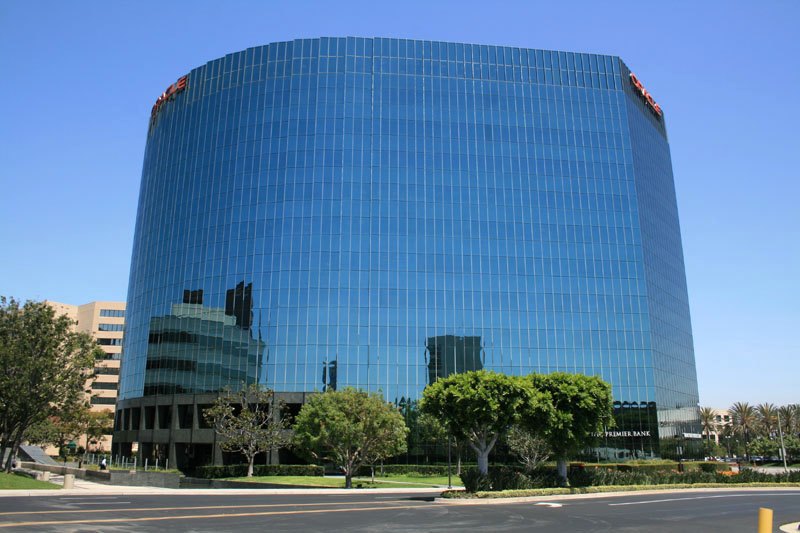
We're hiring engineers and operations leads to build the market layer for compute. Headquartered in Irvine, California.
Headquarters
Where the platform is built.
17901 Von Karman Ave #450, Irvine, CA 92614 →Bay Area office
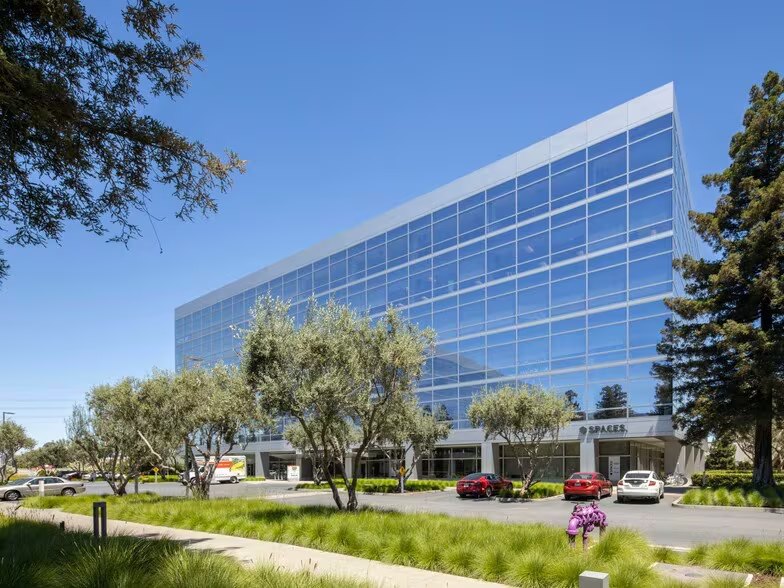
Closer to the hardware and the partners.
2445 Augustine Dr, Suite 201, Santa Clara, CA 95054 →